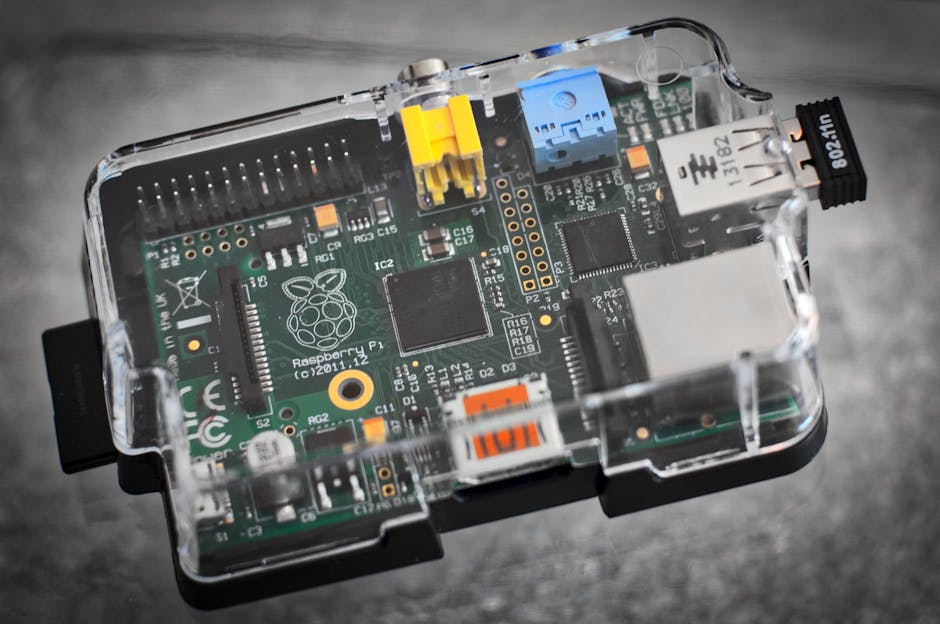
- Hook a 2D LiDAR to Raspberry Pi and use lds2d (Python)
- Quick guide: Raspberry Pi + 2D LiDAR with lds2d library
- Cheap 2D LiDAR on Raspberry Pi — wiring, code, tradeoffs
Summary
This guide shows how to connect a 2D scanning LiDAR to a Raspberry Pi and use a small Python library (lds2d) you wrote to read scans. Advantages/examples:
- Low-cost mobile robotics: obstacle detection and mapping with a Pi.
- Simple data pipeline: serial/USB LiDAR → lds2d → your app (visualizer, ROS bridge, logger).
- Fast prototyping: minimal wiring and a compact Python API for scans.
You'll get wiring notes, install steps, a minimal example program, filtering/calibration tips, alternatives and tradeoffs, parts list, and common pitfalls.
Parts / tools (minimalist)
- Raspberry Pi 3/4 (Linux image with Python 3)
- 2D spinning LiDAR module (TTL/serial or USB interface)
- USB-to-serial adapter (if LiDAR uses UART)
- Stable power supply (Pi + LiDAR; use separate supply if LiDAR needs >500 mA or different voltage)
- Jumper wires, soldering iron (optional), multimeter
- microSD card, SSH/keyboard for Pi
Safety and first checks
- Read the LiDAR datasheet: required supply voltage/current and signal levels (TTL vs RS232 vs USB).
- Never power a 12 V LiDAR from the Pi 5 V rail. Use a dedicated regulator/supply.
- Check logic levels: Pi UART is 3.3 V TTL. If LiDAR is 5 V TTL, use a level shifter.
Wiring (typical)
- If LiDAR has USB: plug it into Pi USB port. It will show as /dev/ttyUSB0 or /dev/ttyACM0.
- If LiDAR has UART (TX/RX/GND/VCC):
- Connect LiDAR GND to Pi GND.
- If voltage and current allow, LiDAR VCC to appropriate supply (not always Pi 5V).
- Connect LiDAR TX → Pi RX (GPIO15, /dev/serial0) through a level shifter if LiDAR uses >3.3V TTL.
- Connect LiDAR RX → Pi TX if the LiDAR expects Pi to send commands.
- If using USB-to-serial adapter: connect LiDAR TX/RX to adapter RX/TX and plug adapter into Pi USB.
Software prerequisites on Pi
Open a terminal on the Pi and run:
sudo apt update
sudo apt install python3-pip python3-venv git
Enable and configure serial port if using /dev/serial0:
sudo raspi-config
# Interface Options → Serial, disable shell over serial, enable serial port hardware
Add your user to dialout:
sudo usermod -a -G dialout $USER
Reboot or re-login.
Install lds2d and dependencies
If you published the library to PyPI:
python3 -m pip install --user lds2d
If local or from Git:
git clone <your-lds2d-repo-url>
cd lds2d
python3 -m pip install --user .
Also ensure pyserial (or any required backends) installed:
python3 -m pip install --user pyserial numpy
(Adjust commands if your library uses a different name or includes extras.)
Minimal example using lds2d
Below is a minimal usage pattern. Replace device path and API calls to match your lds2d API if names differ.
from lds2d import Lidar  # example import; adjust to your library

DEVICE = "/dev/ttyUSB0"  # or /dev/serial0, /dev/ttyACM0

def main():
lidar = Lidar(DEVICE, baudrate=115200)  # pass params your library needs
try:
lidar.start()  # or open() depending on API
while True:
scan = lidar.get_scan()  # e.g., returns list of (angle_deg, distance_m)
# simple filtering
valid = [(a, d) for a, d in scan if d and d > 0.01]
# print a few points
print(len(valid), "points; sample:", valid[:5])
except KeyboardInterrupt:
pass
finally:
lidar.stop()  # or close()

if __name__ == "__main__":
main()
If lds2d yields raw packets, add a conversion step (angles, distance units). Keep reads non-blocking if you combine with other IO.
Simple visualization (optional)
For quick debugging, plot points in Matplotlib:
import matplotlib.pyplot as plt
angles, dists = zip(*valid)
x = [r * math.cos(math.radians(a)) for a, r in valid]
y = [r * math.sin(math.radians(a)) for a, r in valid]
plt.scatter(x, y, s=2)
plt.axis('equal')
plt.pause(0.01)
plt.clf()
This is slow for real-time; use OpenGL/pygame for faster rendering.
Filtering and calibration
- Remove zero or NaN distances returned by some sensors.
- Median filter per angle bin to reduce spurious spikes.
- Ignore readings beyond max_range reported by your sensor or those obviously noisy.
- If angles are jittery, accumulate several rotations and average points by angle bin.
- Time-stamp scans if integrating with odometry.
Alternatives and trade‑offs
- USB LiDAR vs UART: USB is easiest (no level shifting), while UART gives lower-level control and sometimes lower latency.
- Cheap spinning 2D LiDARs: good for hobby SLAM and obstacle avoidance — limited range and angular resolution compared to industrial units.
- Time-of-Flight modules (single-point) are cheaper but not suitable for 2D scanning.
- 2D vs 3D: 2D is sufficient for ground robots and mapping floors; 3D is heavier, more expensive, and more data to process.
- Power: high-performance LiDARs may need separate regulated supplies; low-cost models often run on 5 V but check current draw.
I slightly prefer USB modules for prototyping because they minimize wiring and driver issues; switch to TTL/UART for embedded builds where you need a more compact connection.
Tips, pitfalls, gotchas
- Tip: Always verify which /dev/tty* the LiDAR appears as after plug-in (dmesg or ls /dev).
- Pitfall: Wiring TX/RX backwards is common — TX of sensor → RX of Pi.
- Gotcha: Some sensors stream continuously; opening serial without stopping the stream can produce garbled output. Use library-provided start/stop.
- Tip: Use a separate power supply for LiDAR if uncertain about current draw; check for voltage dips on Pi.
- Gotcha: Remember to set correct baudrate and parity — wrong settings produce garbage.
Debugging checklist
- Use a serial monitor (miniterm or screen) to confirm raw packets:
python3 -m serial.tools.miniterm /dev/ttyUSB0 115200
- Check dmesg on connect to verify the device node.
- Use a logic-level tester/multimeter to confirm voltage levels on TX/RX, VCC, and GND.
Next steps
- Hook lds2d output into a SLAM library (RTAB-Map, Cartographer) or ROS node for mapping.
- Add timestamped frames and integrate odometry for better localization.
- Implement a driver that publishes scans as ROS sensor_msgs/LaserScan if needed.
This guide gives a clear path from wiring to working scans. Keep your wiring tidy, respect power requirements, and filter raw data before using it in mapping or navigation.
Parts & Tools
- Raspberry Pi 4 Model B
- 2D spinning LiDAR module (USB or TTL serial)
- USB to serial adapter FTDI CP2102
- Bi-directional logic level shifter 5V to 3.3V
- 5V 3A Raspberry Pi power supply
- 12V DC power supply 2A
- DC-DC buck converter adjustable 12V to 5V
- Female to female jumper wires
- Soldering iron kit
- Solder wire
- Wire stripper and cutter
- Digital multimeter
- microSD card 32GB
- USB microSD card reader
- USB keyboard
- USB A to micro B cable
- Solderless breadboard